DAVAO CITY (MindaNews / 17 February) – A year after it voted ‘yes’ to inclusion in the Bangsamoro Autonomous Region in Muslim Mindanao (BARMM), Cotabato City now wants exclusion from the BARMM until the end of the transition period on June 30, 2022.
Cotabato City Mayor Cynthia Guiani-Sayadi in a February 7 position paper addressed to President Rodrigo Duterte, a copy of which she sent MindaNews, asked the President to “hold in abeyance the turnover of Cotabato City to BARMM.”
At the end of her eight-page position paper, Sayadi, who campaigned for a ‘No’ vote in the January 21, 2019 plebsicite to ratify the Bangsamoro law, said they are “ardently appealing for a Status Quo until such time that the three-year transition period has been completed and the BARMM bureaucracy would have been fully operational.”
The transition period of the BARMM, which is presently governed by the Bangsamoro Transition Authority (BTA), ends on June 30, 2022 when the first elected BARMM officials shall have taken their oath of office.
 Mayor Cynthia Guiani-Sayadi. MindaNews file photo by MANMAN DEJETO
But lawyer Naguib Sinarimbo, BARMM Minister for Local Government and concurrent BARMM spokesperson, said the inclusion of Cotabato City in the BARMM “is settled already by the Constitution and the Bangsamoro law and that is upon ratification in a plebiscite.”
“The people of Cotabato City have spoken and no one can stop that,” he told MindaNews.
Sayadi, a lawyer, told MindaNews over the weekend that they were “given extension until December 2020” to maintain the status quo.
Asked who granted the “extension,” she replied in a text message on Sunday: “I was informed in Malacanang in the presence of SILG Año (Secretary of Interior and Local Government Eudardo Año). I understand he was given the order to implement it.”
MindaNews asked who gave the order and when but the mayor sent no reply.
But in her Facebook video post on Saturday night, the mayor said “Secretary Ano of DILG said hindi pa time na ilipat ang Cotabato City as of this time – i-defer muna pag-transfer sa Decenber 2020” (it’s not yet time to transfer Cotabato City as of this time and the transfer would be deferred until December 2020).
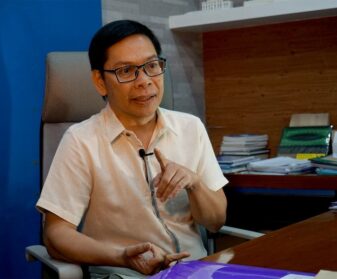
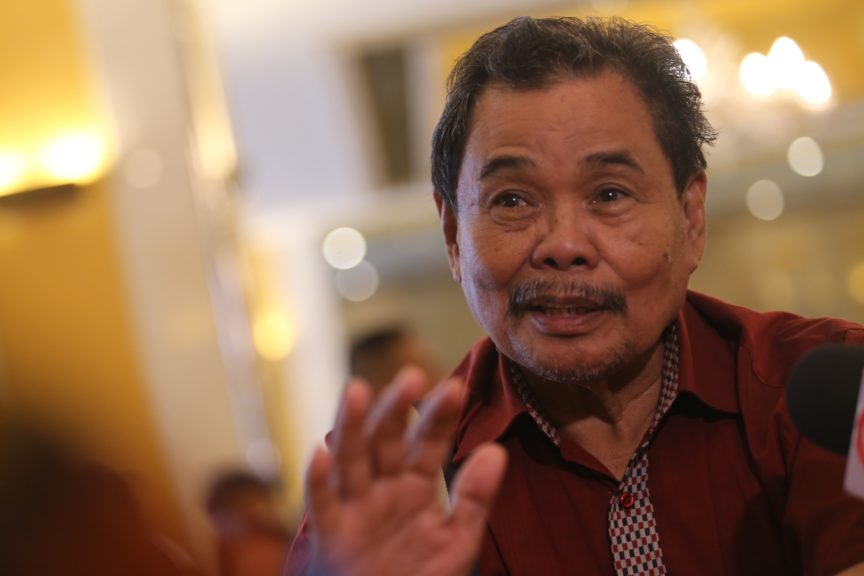 Mohagher Iqbal, Minister for Education and co-chair of the Inter-Governmental Relations Body. MindaNews file photo by MANMAN DEJETO
Mohagher Iqbal, BARMM Minister for Education and concurrent co-chair of the Inter-Governmental Relations Body (he for the BARMM, Finance Secretary Carlos Dominguez for the national government) told MindaNews on Monday they are not aware that a decision has been made on the appeal of Cotabato City. “We have yet to receive a copy of the decision,” he said, adding that President assured he would give a “fair decision” as the BARMM maintained that the vote of the people in the plebiscite must be respected.
President Duterte met with Sayadi and Iqbal and other BARMM officials and Cabinet Secretaries on February 4 and February 12. Duterte, according to MindaNews sources present during the meeting, asked for a legal basis for the city’s appeal.
Cotabato City voted for inclusion in the BARMM on January 21, 2019, with 36,682 in favor and 24,990 against. The mayor said then that they would file a protest, claiming threats and intimidation prevented voters who opposed inclusion in the BARMM from casting their votes. A voter filed an electoral protest.
Constitution, Bangsamoro Law, Jurisprudence
Sinarimbo explained that since the ratification, Cotabato City has been part of the BARMM but “we could not supervise and regulate because the DILG (Department of Interior and Local Government) field office in Cotabato City has not been transferred to the BARMM, contrary to the mandate of the Bangsamoro Organic Law which is within three months” form the organization of the BTA.
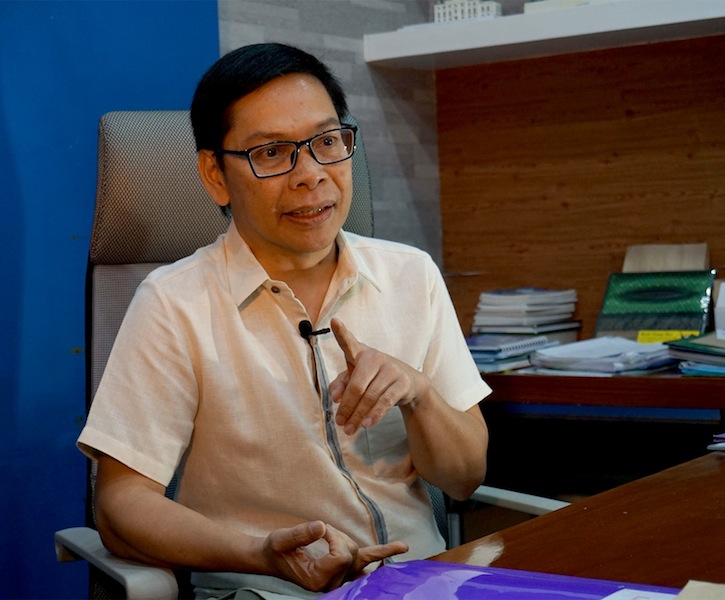 Lawyer Naguib Sinarimbo. Minister for Interior and Local Government, Bangsamoro Autonomous Region in Muslim Mindanao. MindaNews file photo by GREGORIO BUENO
“It is now more than three months and we must comply with the provision of the law,” the BARRM said, citing Article 16, Section 11 of the Bangsamoro law.
in its seven-page position paper submitted to President Duterte, dated Februrary10.
The BARMM took over from the ARMM on February 26, 2019 but it was formally inaugurated on March 29, 2019, graced by President Duterte. Three months from March 29 would have been June 29, 2019.
Thus far, only the Department of Transportation and Communication and, partly the Department of Public Works and Highways, have complied with the provision of the law.
The position paper argued that the BARMM is a constitutional mandate that must be obeyed and the territorial jurisdiction of the BARMM, including Cotabato City, “took effect upon ratification of Republic Act No. 11054.”
RA 11054 is the Organic Law for the BARMM, ratified in January last year by the then five-province, two-city Autonomous Region in Muslim Mindanao, 63 villages in six North Cotabato towns, and Cotabato City, where the seat of the BARMM and its predecessor, the Autonomous Region in Muslim Mindanao (ARMM) is. Sulu voted against inclusion but is still part of the BARMM because the law provides that the ARMM votes as one geographical area.
 Aside from the Constitution and the Bangsamoro law, the BARMM also cited jursiprudence, reiterating that its creation “contemplates the grant of political autonomy and not just adminisitrative autonomy.”
It also cited the case of Disomangcop vs Datumanong where the Supreme Court ruled that regional autonomy is the “granting of basic internal government powers to the people of a particular area or region with least control and supervision from the central government.”
The BARMM said that based on RA 11054, “ratification in a plebiscite is the operative fact that determines the establishment of the territorial jurisdiction and no further act is necessary for the inclusion of provinces, cities and geographical areas in the Bangsamoro Autonomous Region.”
Status Quo
Sayadi’s position paper claimed as legal basis for the President to consider their appeal is that implementation of the law is “inherently executive in nature” and the President has the “full power” to hold in abeyance the turnover of the city to the BARMM.
She also cited the general supervision powers of the President in the Constitution, the Local Government Code, and the Bangsamoro Law’s Article VI which provides that the President shall exercise general supervision over the Bangsamoro Government “to ensure that the laws are faithfully executed.”
Sayadi claimed her city would be placed in a “critical and difficult sitaution” and that the momentum of the city for progress and development “will be unduly derailed” if they would be under BARMM.
She cited several issues to push for status quo until 2022, among them, that the turnover of the city to BARMM is “not urgent.. not exigent.. not necessary as of this time,” claiming the BARMM has yet to pass its Administrative Code; that the system of governance in the BARMM is parliamentary and the BARMM is still “learning its craft.”
The mayor also claimed that after a year, “BARMM has no significant achievement,” that it has “no transition plan” and cited other issues pointing to the alleged incompetence of the BARMM and that the turnover of Cotabato City to BARMM now “will imperil the development and growth and bring confusion in Intergovernmental Relations of the City.”
She also claimed peace and order “would be seriously sacrificed,” adding the incidence of crimes has “significantly increased” since the BARMM was set up and that investors are “withdrawing their investments because of this perceived threat to peace and political stability.”
She cited four cases pending in the Supreme Corut – three on the issue of constitutionality of the Bangsamoro law filed by Sulu Governor Abdusakur Tan vs Executive Secretary Salvador Medialdea, Philippine Constitution Association vs Senate, and Congressman Dimaporo vs Commission on Elections, and a petition for nullification of the plebiscite results in Cotabato City (Amil P. Sula vs Comelec).
Sinarimbo said the Administrative Code is “not a requirement for the inclusion of Cotabato City in the BARMM or the transfer of national agencies located in Cotabato whose functions have been transferred to the Bangsamoro.”
He said the Bangsamoro law provides that “subsisting regional laws, including the Administrative Code, continue to operate unless revoked by the Parliament.”
Still with Region 12?
Sayadi’s reference to a “status quo” is apparently for Cotabato City to remain with Region 12 where it was a part of before last year’s plebiscite on the Bangsamoro law.
But is Cotabato City still part of Region 12?
Teresita Socorro Ramos, Regional Development Council-12 (RDC-12) acting chair told MindaNews Monday that the region’s highest policy-making body considers Cotabato City already part of the BARMM.
“Following the ratification of the Bangsamoro Organic Law, RDC-12 reorganized and no longer includes Cotabato City as its member. Since then, we have not been inviting Cotabato City to attend RDC-12 meetings,” Ramos, also the director of the National Economic and Development Authority-12, told MindaNews in a telephone inteiew.
She, however, said that several national government line agencies in Region 12 that have no counterpart in the BARMM as yet, continue to include Cotabato City in their budget items “so as to avoid stunting the growth of the city by depriving it of budget.”
Ramos sad the budget allotted by national government line agencies in Region 12 “can be turned over to the BARMM once the new Bangsamoro region has completed its transition process.” (Carolyn O. Arguillas with a report by Bong Sarmiento / MindaNews)