DAVAO CITY (MindaNews / 03 March) — March 6 of the year 2019 is Ash Wednesday. As most Catholics know, this day marks the beginning of the Lenten Period, the liturgical year of the Christian Churches lasting 40 days. Lent is the season marked for repentance, fasting, reflection, and ultimately celebration with a commemoration of Jesus Christ’s Resurrection on Easter Sunday. Count 46 days from March 6 and the 46th day would be Easter Sunday.
Lent is the season when the believers’ focus is on Christ’s life, ministry, sacrifice and triumph from death.
Islam – a faith tradition in the Abrahamic mold like Judaism and Christianity – also sets aside days of fasting and sacrifice, which is their Ramadhan to commemorate the first revelation of the Quran to Muhammad according to Islamic belief. But one can observe that Muslims seem to be more devout in honoring the Ramadhan days than Christians would for Lent.
There was a time in the pre-Vatican II days when the Catholic Church was more aggressive in encouraging the members to engage in fasting and abstinence, as well as to be more sensitive in making sacrifices (e.g. quit smoking and drinking alcoholic drinks) as well as giving more alms to the poor. But in the contemporary world that has become more secularistic, Catholics are not as eager and committed to honoring the tenets of Lent.
It might not be a bad idea to bring the faithful again to a deeper awareness of the meaning of Lent, not just as a time to make sacrifices (through fasting and abstinence) but do be engaged in repentance of our sins that would bring about our reconciliation with God. This is the biblical notion of Atonement (see the book of Leviticus as to how the Jews of the Old Testament set aside days of rituals for this purpose). According to the Encyclopedia Britannica, atonement is “the process process by which a person removes obstacles to his reconciliation with God. It is a recurring theme in the history o religion and theology. Rituals of expiation and satisfaction appear in most religions, whether primitive or developed, as the means by which the religious person reestablishes or strengthens his relation to the holy or divine. Atonement is often attached to sacrifice, both of which often connect ritual cleanness with moral purity and religious acceptability.”
For us Filipino Catholics, the idea of atonement is most timely as we move towards March 16, 2021 which is just two years from now. On this day, the Philippines will celebrate the 500th year of the Christianization of the Philippines. Among various ecclesiastical and academic groups, there are already discussions on how best to celebrate this event. It can be assumed that all Filipinos will be bombarded by the significance of what took place half-a-millennium ago. But chances are, most interpretation of this significance will be romanticized. There will be jubilant celebration all across the land. Church and State will compete in making sure no stone is left unturned in order to make sure that the celebrations will be grand. Emphasis will naturally be in highlighting the positive, the favorable and the cause for joy.
I do not completely disregard the positive significance of this historical moment. But one hopes we can be a bit more circumspect about the implications of this historical moment. It is my hope that there will be a range of opinions – from the various disciplines – on how to give meaning to this date.
- Did our pre-conquest ancestors have their own indigenous belief system? If there was, what constituted such a belief system? What were their faith practices based on their beliefs?
- How did the Spanish friars conduct their evangelization campaigns so that they were able to proselytize the people to the point where Catholicism as religion got firmly established in the country? What sort of Catholic religion was introduced in terms of doctrine, tenets and practices?
- What factors contributed to the success of their conversion schemes?
- If there was any form of resistance, how did they handle the people’s attempt at resisting the introduction of the new religious system? Was force or even violent means employed? If so, what were these and who were the main victims?
- How did Muslim Filipinos (Tausogs, Maguindanao, Maranaw, Iranun, Kalagan et al) manage to hold on to their Islamic faith?
- Whatever happened eventually to the non-Islamized indigenous people’s belief system?
- In fact, what kind of “Christianity or Roman Catholicism” is practiced by most Filipinos today as a result of the evangelization process that began during the Spanish era? What have been some of opinions shared by a number of social scientists and theologians regarding the kind of Christian faith predominant among Filipinos today?
We need to discuss these questions and find adequate answers from various sources.. But one more question begs to be asked. All throughout this historical process, has a “chauvinist Christianity” asserted itself to the point where it helped destroy the fabric of a belief system that for centuries held the people’s lives in a symbolic manner that made possible living a most humane, just and compassionate way of life? If this is so, isn’t it appropriate to critique this kind of Christianity that has persisted in the Philippines since the dawn of Spanish colonization? And if this is proven as a fact, is it not a just thing to do for the Roman Catholic Church in 2021 to ask for forgiveness to our ancestors and their descendants for having committed this grievous “sin”?
In order to begin discussion on the above questions, the Ateneo de Davao University will convene another session of the PAKIGHINABI SERIES on the theme – “Historical Injustice: The Church’s Mea Culpa on the Complex Process of Colonization and Evangelization” with a sub-topic on “Digging for the Indigenous Wellspring: Towards a Meaningful Celebration of the 500th Year of Christianization of the Philippines.”
This will be held at the Pakighinabi Room, Matteo Ricci Dialogue Center, third floor of the Community Center of the First Companions or ADDU on March 06, 2019, 3:00 pm 5:30 pm.
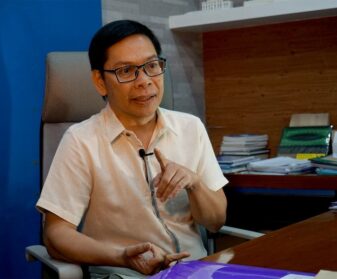
I will be the lead discussant of this forum. Those who constitute a circle of reactors include: Dr. Heidi Gloria,Mr. Edgar Rene Nartatez, Ms. Marlina Dayrit, Mr. Sultan Obpon, Dr. Mansoor Limba , Mr. Dennis Coronel , Rev. Fr. Ulysses Cabayao, SJ and Most Rev. Fernando Capalla, DD.
(Redemptorist Brother Karl Gaspar is a professor teaching at St. Alphonsus Theological and Mission Institute (SATMI) in Davao City and the Ateneo de Davao University. Gaspar is author of several books, including “Desperately Seeking God’s Saving Action: Yolanda Survivors’ Hope Beyond Heartbreaking Lamentations” and two books on Davao history launched in December 2015 and Ordinary Lives, Lived Extraordinarily – Mindanawon Profiles. He writes this column for MindaNews)