LIBONA, Bukidnon (MindaNews / 25 November 2026) — While frontline communities resist ecological degradation brought about by large-scale mining activities, police and other state security forces routinely enforce compliance under the Philippine Mining Act of 1995. This clash between state-sanctioned extraction and community survival raises fundamental moral and legal questions: Is nonviolent civil disobedience justified when statutory laws perpetuate environmental destruction? Can meta-legal principles—such as human rights and ecological sustainability—legitimize mass protest when positive laws shield destructive practices?
The Growing Anti-Mining Mass Protests
For grassroots advocates across the Philippine archipelago, the answer to the preceding questions is an unequivocal YES! In Luzon, Indigenous peoples and local farmers in Kasibu and Dupax del Norte maintain access barricades against mineral exploration, while communities along the Abra River contest dredging operations, and forest advocates across Palawan and the Sierra Madre oppose land conversion.
In the Visayas, island communities on Sibuyan, Homonhon, and Manicani deploy human walls, rallies, and legal actions against nickel, bauxite, and chromite extraction, while Leyte farmers oppose magnetite iron-sand mining to safeguard agricultural lands.
In Mindanao, Indigenous groups in the Dinagat Islands and Davao Oriental mobilize against mining expansions to defend vital watersheds, while campaigns across Surigao del Norte and Surigao del Sur link nickel extraction to severe marine pollution, coastal erosion, and heightened climate vulnerability.
The Option for Nonviolent Civil Disobedience
Jesuit Bishop Francisco Claver, former Bishop of Malaybalay, reflected on this very option in the context of political activism during martial law. Here is an excerpt from his pastoral letter:[1]
“We live under violence. And the communist urging is to counter this violence with violence—the same kind of violence, the violence that kills.
This is where we as Christians differ most, I would think, from Communists, even if we may be one with them in our desire to right injustice, to uplift the downtrodden, to give power to the masses. It is not that the Christian must avoid at all costs armed violence. Under very restricted circumstances—as a last resort—violence can be moral. This is ordinary Catholic teaching. Violence in self-defense, for instance. And that self can be individual. It can be collective too.
But as an equally ordinary means of redressing wrongs I doubt violence is Christian. ‘Put your sword back in your scabbard’ [Matt 26:52]. ‘Turn the other cheek’ [Matt 5:39]. These are hard sayings of Christ, but they do point, I believe, to something that is at the core of Christianity; not repaying evil with evil [cf. Rom 12:21]. But does this mean, when we suffer violence, that we must meekly give in? Allow ourselves to be trampled upon? Have no thought for our dignity as children of the Father? Just so long as we survive? I doubt this is Christian either. So what is Christian?
Some act, I should think, like David’s toward Saul—the violence of the meek. This is not just a nice phrase, a clever paradox. For the action it connotes comes from strength. It also comes from gentleness, the strength and gentleness of Christ.
The main intent is to correct an unjust law by opposing it, by disobeying it—nonviolently. […] But is this kind of disobedience to law disruptive of the general order? It is indeed. But if that same order is based on unjust laws, it deserves to be disrupted precisely in order to set it right again—not violently unless that were the only way, but peacefully. This means—and here we bring in an essential aspect of civil disobedience—citizens who choose the way of civil disobedience to protest what they in conscience believe to be an unjust law must be ready to suffer the penalties imposed by a state for their disobedience.
This is the violence of the meek. Christ practiced it even unto Calvary. He violated the Sabbath law to correct its unjust man-made prescriptions. He criticized public authorities openly for their twisted interpretations of the law. He gathered the people together against the wishes of those in power and spoke to them of the kingdom that was to come. And for all this he was visited with violence. And the charge leveled at him? Subversion and rebellion.
‘The Lord put you in my power, […] but I would not raise my hand’ [1 Samuel 24:11]. Do these words mean anything to our living of Christianity today?”
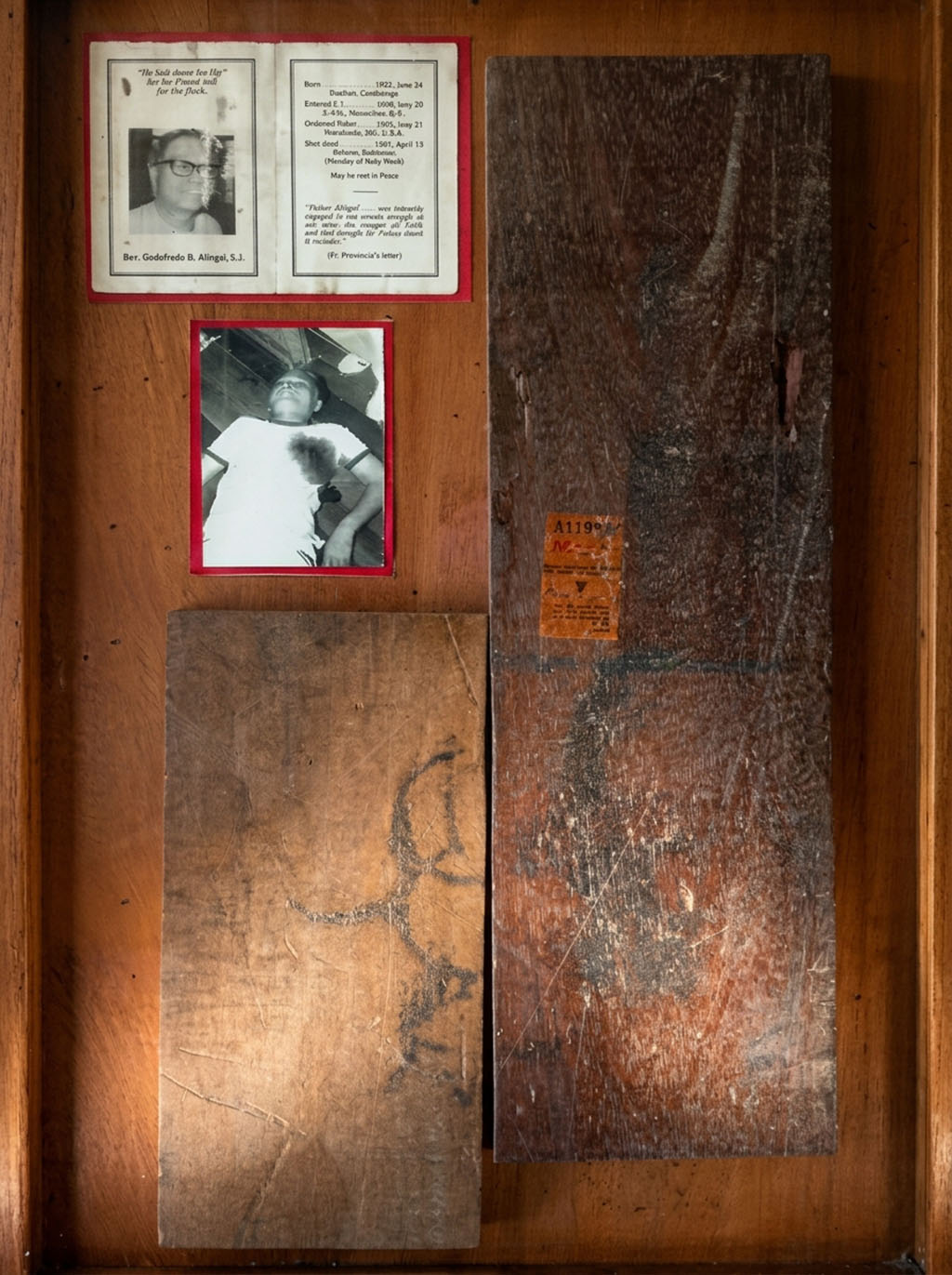
Fr. Godofredo Alingal, SJ, former parish priest of Kibawe, Bukidnon, was killed for embracing this Christian option. Those who knew him recalled how he took the Church’s stance on social justice to heart, swiftly translating it into both fiery preaching and shared action with the local people.[2] After his first death threats, hired killers assassinated him on April 13, 1981.
In his funeral homily for Fr. Alingal, Bishop Claver emphasized that Fr. Alingal could only have spared his life by abandoning his post or turning a blind eye to surrounding injustices; instead, he chose to stay and give his life for his community as a true shepherd.[3]
Father Alingal dedicated himself strictly to peaceful activism. His choices demonstrated that seeking justice does not require physical force, aligning completely with the Prelature’s mission to reject violence from both state military and insurgent forces while continuously pursuing peace built on justice.
Opting Victimhood
In 1984, the Philippine bishops collectively adopted the Gospel ideal of nonviolence articulated by Bishop Claver. In their pastoral letter Let There Be Life, they insisted that “a bloody revolution is unacceptable” and urged that “another way of bringing about drastic change must be sought for.” They affirmed that “the non-violence of Christ presents itself to us as the only acceptable answer.”[4]
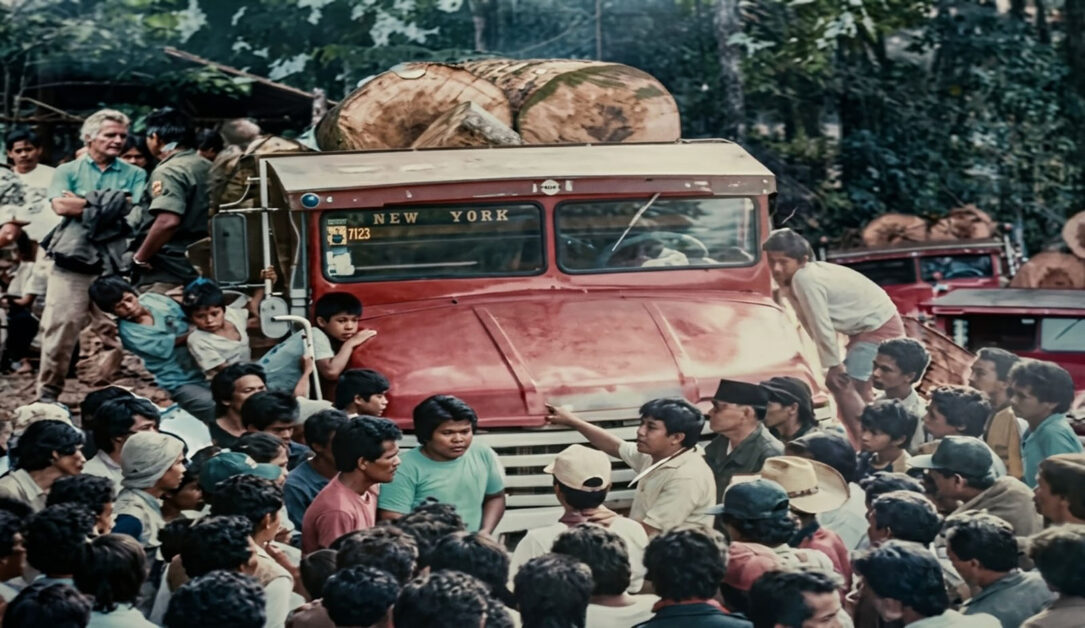
Starting in 1987, parishioners from San Fernando in the Diocese of Malaybalay launched church-led protests that successfully secured a Bukidnon-wide logging moratorium by 1990. To enforce this order, the Department of Environment and Natural Resources (DENR) deputized then-Bishop (now Cardinal) Gaudencio B. Rosales along with 45 local priests and deacons as forest officers. This bold resistance provoked violent retaliation from illegal logging operations, culminating in the assassination of Fr. Nery Lito ‘Neri’ Sator on October 14, 1991.
Despite intense pressure to use force to protect priests facing death threats, Bishop Rosales chose the path of nonviolent ecological struggle. He firmly refused to endorse violent measures, whether in self-defense or to stop illegal logging, arguing that retaliation would betray the legacy of the martyred Fr. Sator.
Bishop Rosales stressed that “violence and killings might stop the cutting of trees for a short time; but the root cause of this issue of ecological destruction would not be solved.” Instead of urging retaliation, he reminded the faithful of their Christian vocation: “we are always ready to be harmed while we are giving Christ to the people. Victimhood is at the core of poverty which brings us to the very heart of his Kingdom—Love.”[5]
Addressing Root Causes
Fathers Alingal and Sator represented the local Church’s sacred offering in the nonviolent struggle. Grounded in Bishop Claver’s principle of the violence of the meek, their resistance to systemic injustice was no lawless rebellion, but a deliberate assertion of Christian dignity that accepted the cost of martyrdom to transform unjust structures.
Applying Claver’s framework to ecological struggle, Bishop Rosales resisted the pull of armed self-defense. In doing so, he honored the martyrdom of Fr. Neri Sator and refocused the movement on dismantling the structural roots of environmental devastation.
Together, their witness confirms that nonviolent resistance—grounded in divine love, sacrifice, and moral resolve—remains the Church of Bukidnon’s enduring path to confront ecological devastation without reproducing the very violence that threatens human life and nature.
For Christian activists, it is imperative to confront ecologically destructive laws through nonviolent civil disobedience, accept the legal consequences, and dismantle systemic causes rather than settle for temporary relief.
[1] Francisco F. Claver, “The Violence of the Meek,” in The Stones Will Cry Out: Grassroots Pastorals (Maryknoll, NY: Orbis Books, 1978), 20-22.
[2] See Vincent Cullen, SJ, “Godofredo Alingal, SJ: Man from Mindanao, A Quiet Man,” in the The Jesuit Bukidnon Mission District (no place and date of publication); available from: https://jesuitbukidnonmission.org/fr-alingal (accessed: November 11, 2024).
[3] See Francisco Claver, SJ, “The Empty Tomb of Kibawe” (Malaybalay, Bukidnon: April 26, 1981); available from: https://bukidnonnewstoday.wordpress.com/tag/fr-godofredo-alingal/ (Accessed: November 11, 2024).
[4] Catholic Bishops’ Conference of the Philippines (CBCP), Let There Be Life, Pastoral Letter, July 11, 1984.
[5] Gaudencio Rosales, Fr. Neri Satur and the Church He Died For (Quezon City: Claretian Publications, 1997), 16, 104.
——————
(MindaViews is the opinion section of MindaNews. Fr. Reynaldo D. Raluto is the parish priest of Jesus Nazareno Parish in Libona, Bukidnon. He is the author of the book ‘Integral Ministry: Doing Ecological Theology and Advocacy in Light of Laudato Si,’ published in September 2025 by the Mindanao Institute of Journalism.)