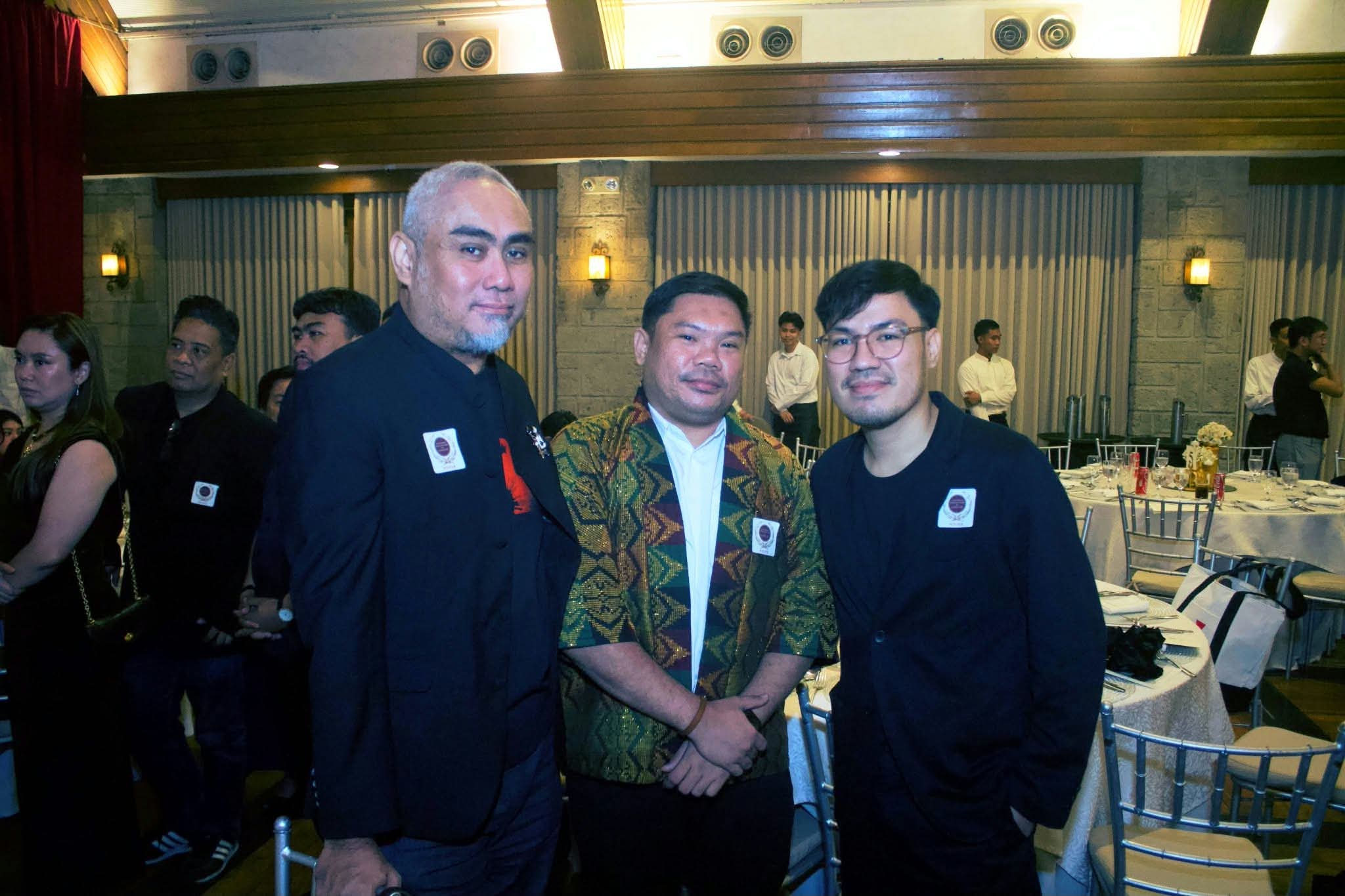
GENERAL SANTOS CITY (MindaNews / 25 November 2026) — Four writers from Mindanao, including three Moro writers, were among the awardees of the 76th Carlos Palanca Memorial Awards for Literature, bringing stories shaped by the region’s varied experiences to the country’s literary stage.
Gutierrez Mangansakan II won the Grand Prize for Novel in English for Faramanis, while Mubarak Tahir received Second Prize in both Dulang May Isang Yugto and Tulang Pambata.
Jade Mark Capiñanes of Davao City won Second Prize in Essay, while Ruby Ahaja of Tawi-Tawi received Third Prize in Short Story for Children.
For Tahir and Mangansakan, both Maguindanaon writers, their recognition reflects different ways of drawing from personal and collective experiences to create literary works.
Tahir said his two winning works were largely influenced by personal experiences, although they demanded different approaches because of their literary forms.
His one-act play, Ang Huling Panawagan sa Pagdarasal, draws from the everyday experiences of ordinary Moro people in public markets which, he said, often go unnoticed by politicians.
His collection of children’s poems, meanwhile, draws from his childhood experiences before he moved to Davao because of the continuing conflict in Maguindanao.
”Malaki ang impluwensiya ng sariling danas sa parehong akda na nanalo (Personal experience has a significant influence on both winning works),” Tahir said.
He likened experience to the flesh of a literary work, with literary devices giving it shape and form.
”Kung katawan ang mga akdang ito, ang danas ang siyang kalamnan habang ang bawat hugis, laki, haba, at anyo ng mga ito ay kumakatawan sa mga literary devices na nakatulong sa pagpapahusay ng akda (If these works were a body, lived experience would be the flesh, while their various shapes, sizes, lengths, and forms represent the literary devices that helped enhance the work),” he said.
Despite their shared foundation in personal experience, Tahir said he approached the two works differently.
Writing children’s poetry required careful consideration of the words used, particularly the capacity of young readers to understand the poems and form clear images from them.
”Mas maingat sa tulang pambata dahil maliban sa isinasaalang-alang ang mga salitang gagamitin batay sa kakayahang umunawa ng mga bata na basahin ang mga tula, kinakailangan din na mas madali nilang makuha ang mensahe at makabuo ng malinaw na imahen— mas liriko, mas mainam (One must be more careful when crafting poetry for children; beyond selecting words suited to their reading comprehension level, it is also essential that they can easily grasp the message and form clear mental images—the more lyrical, the better),” he said.
The play, meanwhile, required a more philosophical and spiritual treatment of language, with its political message intended not only to be understood through reading but also felt by audiences when performed.
”Samantala, sa dula, mas pilosopikal at espirituwal ang paglalatag ng mga salita bilang ito ang paksa ng akda; mas nangangailangan ng malaliman na pag-unawa, hindi dahil sa mga ginamit na mga salita, ngunit ang kahulugan ng mga ito sa bigat at dating nito sa tagapanood kapag itinanghal. Higit lalo, mas politikal ito— kumakalampag sa Sistema (Meanwhile, in a play, the arrangement of words is more philosophical and spiritual, as this constitutes the very subject of the work; it demands a deeper level of understanding—not necessarily because of the specific words used, but because of the weight and impact those words carry for the audience during a performance. Furthermore, it is inherently more political—challenging the system),” he said.
For Mangansakan, writing is also an act of confronting questions about memory, history, and the ways Mindanao is represented.
He said he repeatedly returns to questions that have no easy resolution, including who gets to tell the story of Mindanao, whose memory becomes history, and what happens when the grand narratives of nation, religion, conflict, and politics enter people’s intimate lives.
”I am interested in the gap between the Mindanao that is imagined from elsewhere and the Mindanao that I have actually known,” he said.
He said he has always been fascinated by the contradictions of a place that carries the weight of generations of conflict but is still full of people worrying about lunch, falling in love, gossiping about their neighbors, going to the market, watching Facebook reels, or dreaming of leaving and returning home.
”These ordinary details are not peripheral to history, rather they are where history actually lives,” he said.
For Mangansakan, filmmaking and writing are also acts of remembrance, shaped by what he inherited from his grandparents, what he chooses to remember, and what he deliberately forgets.
”As a Maguindanaon and Bangsamoro writer, I cannot separate these questions from the larger histories of colonization, displacement, the Moro struggle, and the complicated formation of the Philippine nation,” he said.
”But I don’t want literature to become merely an archive of grievances or a catalogue of suffering. I want to explore the full humanity of people who happen to live in a place that has so often been reduced to conflict.”
Mangansakan also questioned the expectation that literature from Mindanao must always explain the region to readers elsewhere in the country.
He said stories from the South are often read ethnographically, as though every work must function as a cultural briefing about conflict, poverty, Islam, insurgency, or Indigenous life.
”These things are important, of course, but literature is more unruly than anthropology or journalism,” he said.
”A novel or a film should also be allowed to be strange, funny, erotic, philosophical, absurd, formally experimental, intimate, or simply about two people having a difficult conversation.”
For him, Mindanawon writers should be allowed to write from their own histories and places without feeling obliged to represent an entire region.
”I think the first thing is for us to stop apologizing for where the story comes from,” he said.
”A story from Mindanao should not have to become less Mindanawon in order to be considered part of Philippine literature. It should be allowed to carry its own languages, histories, humor, silences, landscapes, and ways of understanding the world.”
He said the specificity of a story is not a limitation but precisely what gives literature its power.
”A deeply particular story can become universal not by removing its cultural specificity, but by rendering that specificity truthfully and imaginatively,” he said.
Mangansakan’s winning novel, Faramanis, itself underwent a transformation before becoming a literary work.
Originally conceived as a screenplay, the project was developed through international programs, including the Locarno Open Doors Script Mentorship Program and the Asia Pacific Screen Awards–Motion Picture Association Film Fund.
However, producing the historical period piece proved challenging, prompting him to turn the screenplay into a novel.
A filmmaker, fictionist, essayist, and editor, Mangansakan has worked across literature and cinema for more than two decades. He founded the Salamindanaw Asian Film Festival and Bidadali Press and edits the Bangsamoro Literary Review.
Tahir, a professor of Filipino at Mindanao State University-General Santos, writes poetry, drama, essays, research, and translation. He previously won a Palanca Award in 2017, receiving Third Prize in Sanaysay for Aden Bon Besen Uyag-uyag (May Buhay Pa Pala).
Both writers also served as panelists in the inaugural Bangsamoro Writers Workshop, where they engaged and mentored emerging writers from across the Bangsamoro region.
The recognition of the four writers highlights the range of literary work emerging from Mindanao, from stories informed by personal memories and historical experiences to works that explore the region beyond familiar narratives of conflict.
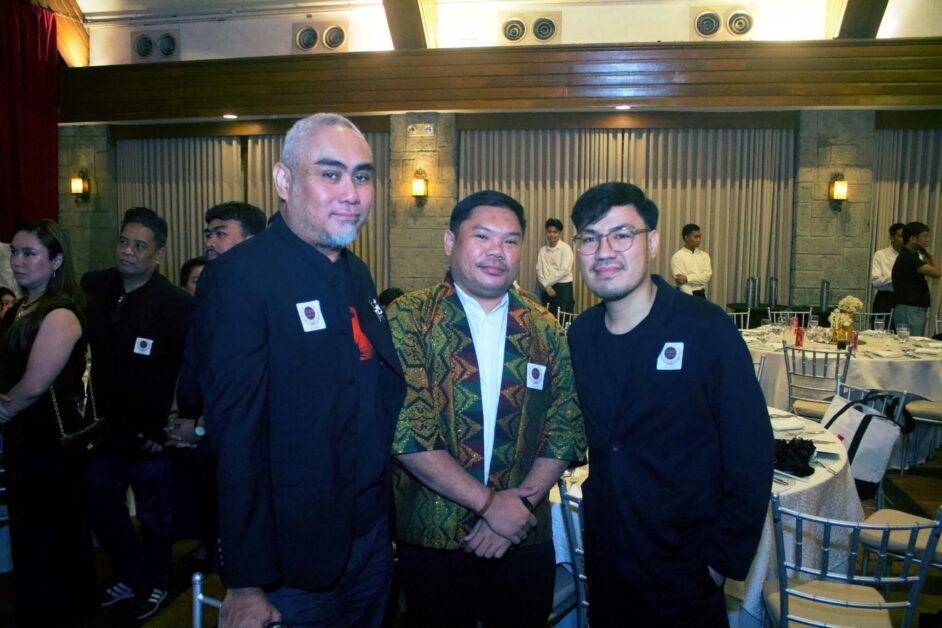
The 76th Carlos Palanca Memorial Awards for Literature held its awarding ceremony Tuesday night, November 24, 2026, at the Manila Polo Club. (Justine Paul Paraz / MindaNews)